Erna Masarovičová, a prominent sculptress, medallist, and jewellery designer, was also a pioneer of the welded metal sculpting technique. She mastered the process of welding iron in the 1960s and remained faithful to it throughout her creative career.
For the relaxation area of the small atrium at the Faculty of Civil Engineering, she created an abstract metal sculpture mounted on a concrete base. It comprised a horizontally arranged upper section set perpendicularly on a tall vertical base. In this arrangement of its elements, resting a horizontal lintel upon a vertical support, the work evoked the fundamental structural form of architecture – a theme also alluded to in its title, Construction, and thereby a reference to the civil engineering studies at the faculty. The sculpture featured a distinctive relief effect achieved through convex and recessed surfaces grouped into a solid, angular arrangement with numerous perforations. The rational design and clean surfaces were minimally ornamented by the exposed structure of the joints between the welded parts of the hydronalium and the steel sheet. It is possible that the metal surface was originally painted, similar to the kinetic relief Flower that the artist prepared for the BAZ high school dormitory in Dúbravka.
The rational–technicist rendering reflects the influence of geometric abstraction and the formalism of neo-constructivism that had been emerging in Slovak art since the 1960s.
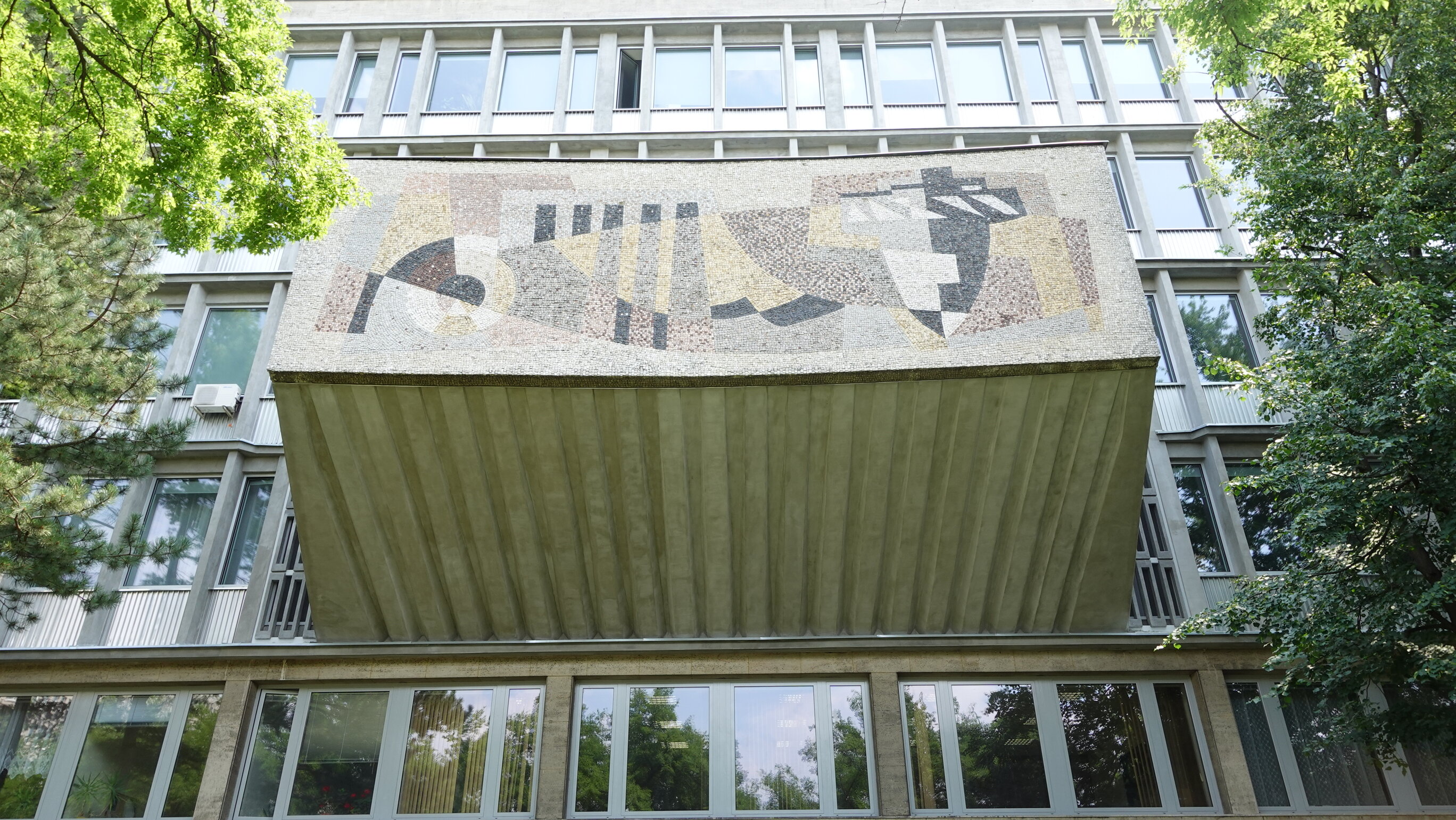
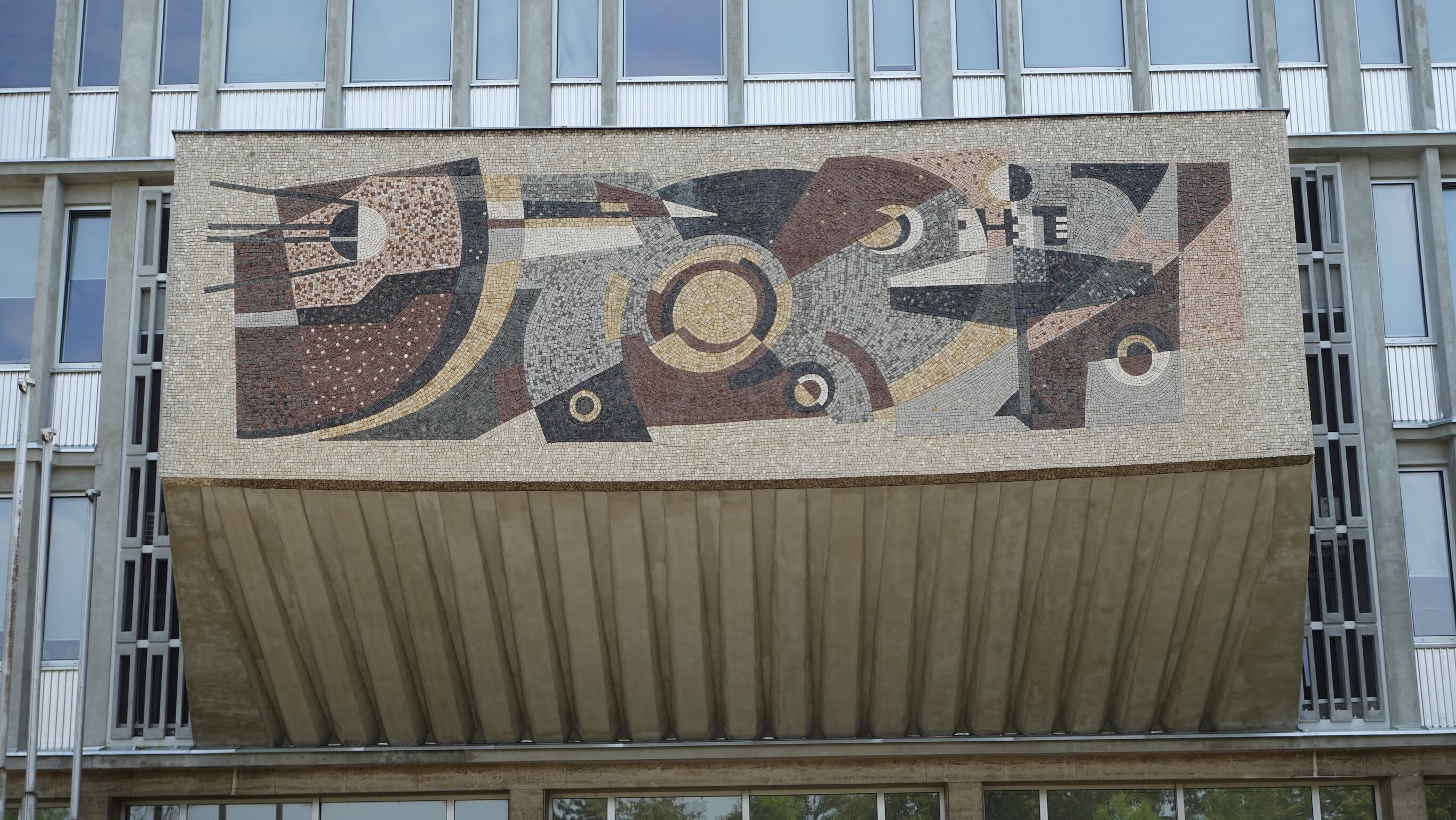
The Faculty of Civil Engineering at STU (SVŠT) was built between 1963 and 1974 according to a design by O. Černý. The low-rise structure with its two atria was connected to the Faculty of Mechanical Engineering, a building designed by Prof. M. Kusý, while the high-rise structure housing the various departments became the architectural centrepiece of the complex. Construction of the Faculty of Civil Engineering also served to enclose the STU campus on the side that faces today’s Freedom Square and Imrich Karvaš Street, creating a shared courtyard that unfortunately now only functions as a car park and storage area.
NB
Research status as of 19. 06. 2024.