The work, created by the painter Viktor Hulík, depicts a man peering out of a half-open manhole at the intersection of Rybárska Brána, Panská, and Laurinská streets. It comprises a representation in bronze of man’s head and upper back, with his chin resting on his joined hands, atop a cast iron shaft opening from which the circular cast iron and concrete cover is partially removed (both elements bear several technical markings). The quasi-realistically depicted Čumil is wearing a coat and a cap with a pompom. A traffic sign was subsequently added beside the work – a metal post and red-bordered triangular panel with a black graphic depiction of Čumil on a white background. Beneath the panel, a rectangular supplementary sign in white with a black frame and black capital letters bears a humorous inscription in English: "MAN AT WORK".
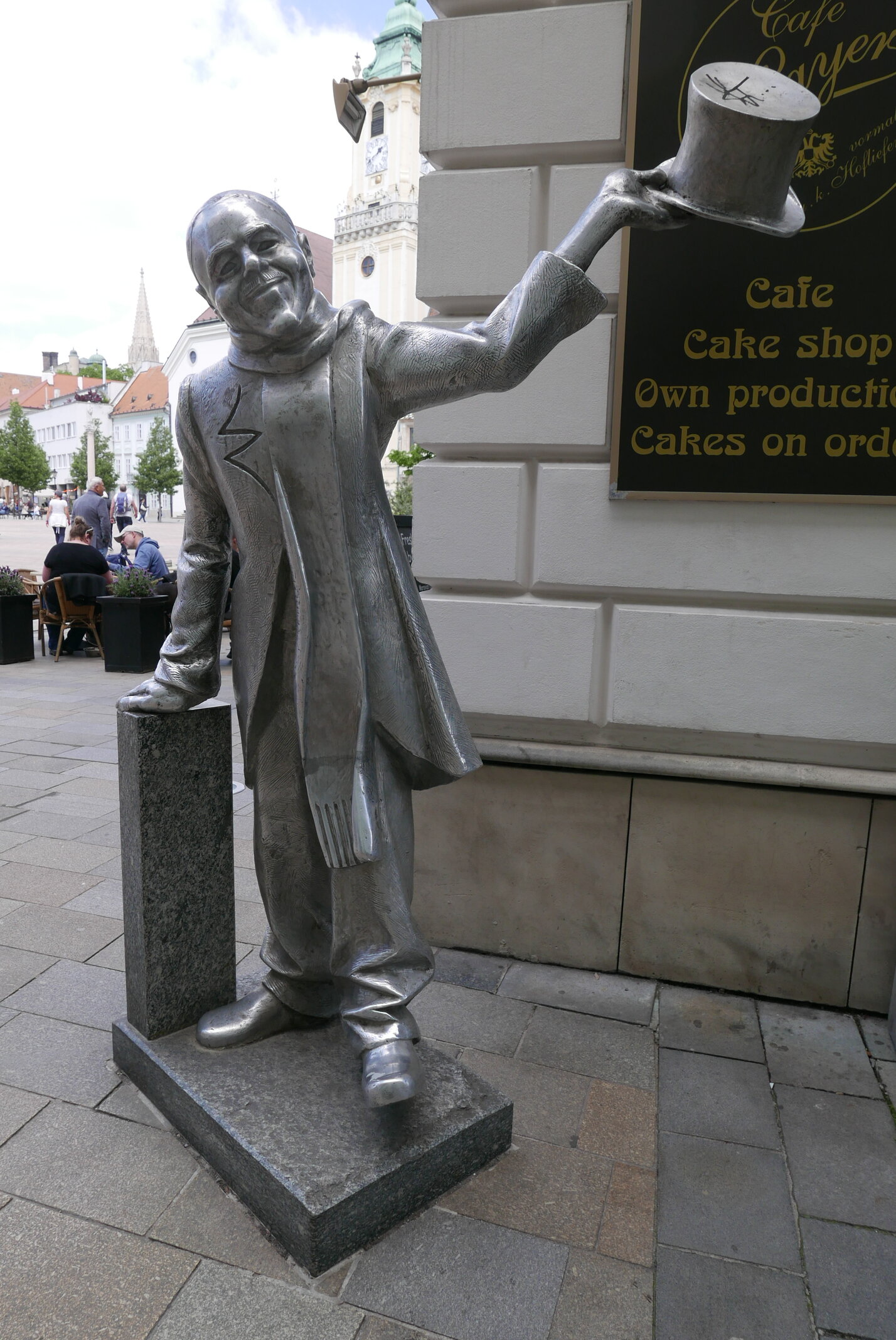
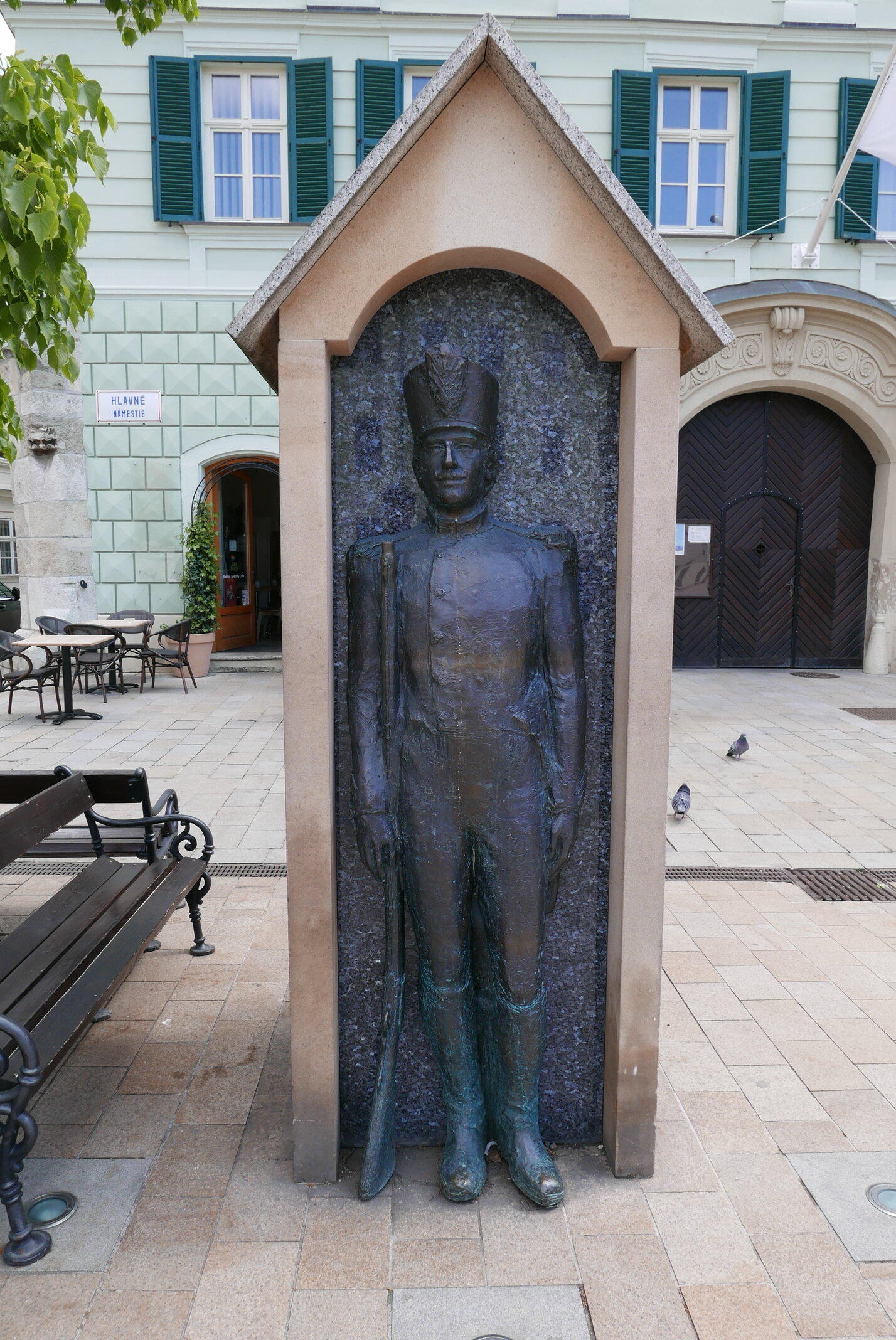
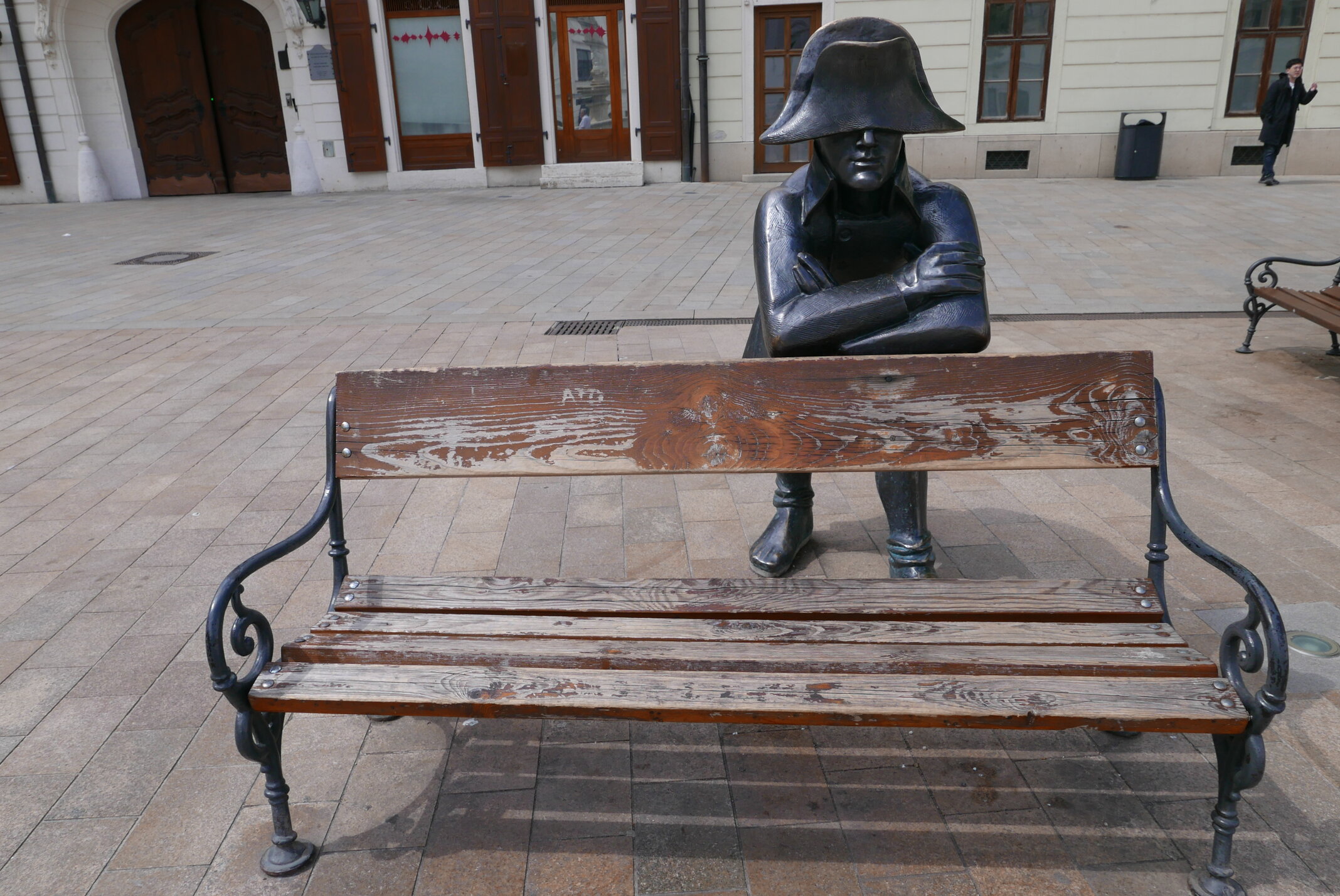
The work, commissioned by the local government of the Old Town district, was ceremonially unveiled on 26 July 1997 as part of the Korzo Party event that marked the completion of the fourth stage of the renovation of the Old Town pedestrian zone. Two other artworks were unveiled nearby on the same day – the sculptures Napoleonic Soldier and Schöne Náci, both by the professor and sculptor Juraj Meliš.
An original plan to create further similar works was later abandoned.
Čumil, perhaps the most photographed work of art in Bratislava, is a city centre attraction shrouded in legends and stories, and its image is featured on numerous Bratislava souvenirs. Crowds of tourists stop at the sculpture, both to take souvenir photos and to touch the pompom on his cap – it is claimed to bring good luck. Hulík's work is also widely known outside Slovakia, and the theme has been "copied" many times across various foreign cities, especially in Russia.
The artist said of his work: "Čumil is a completely anonymous character that I invented because, as a teenager, I often visited the Korzo promenade and wanted this character to express the sense of well-being, smiles, and good mood that then prevailed there. I believe that thanks to Čumil they have returned there after many years." He added on another occasion: "For me, however, Čumil is hardly great art. It's a bit of fun, a joke, a gag, humour, nothing more."
Because of its exposed location, the work has been damaged several times by inattentive drivers and by vandals. During the first two years alone there were three incidents, and it was following damage caused by a careless driver in 1999 that the aforementioned traffic sign was installed (itself damaged and restored in 2011).
PB
Research status as of 15. 06. 2023.