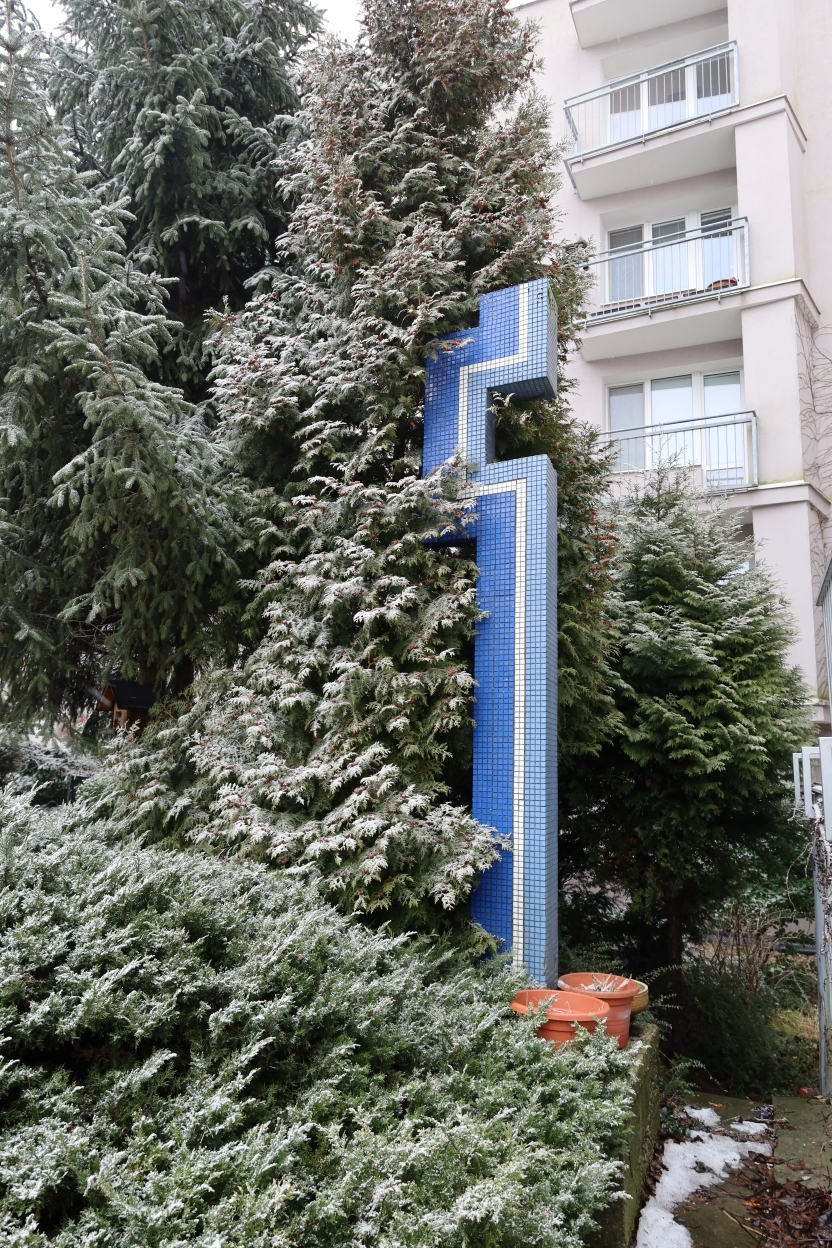
A set of three abstract objects is located in front of an apartment building on Drotárska Cesta. They were created as an aesthetic and artistic enhancement to the forecourt of the apartment building, and also serve as its emblem. With their striking verticality, they resemble totem poles, structures that symbolised a particular community (tribe) and had a protective function.
Located in front of the individual entrances, these three objects vary in their artistic design. At present, however, they are neither clearly visible nor easily accessible due to overgrown vegetation.
The architect of the residential complex to which they belong is Manol Kančev, who frequently collaborated with the artist M. Šimurda, including on the boarding school for hearing-impaired children that is located across the street.
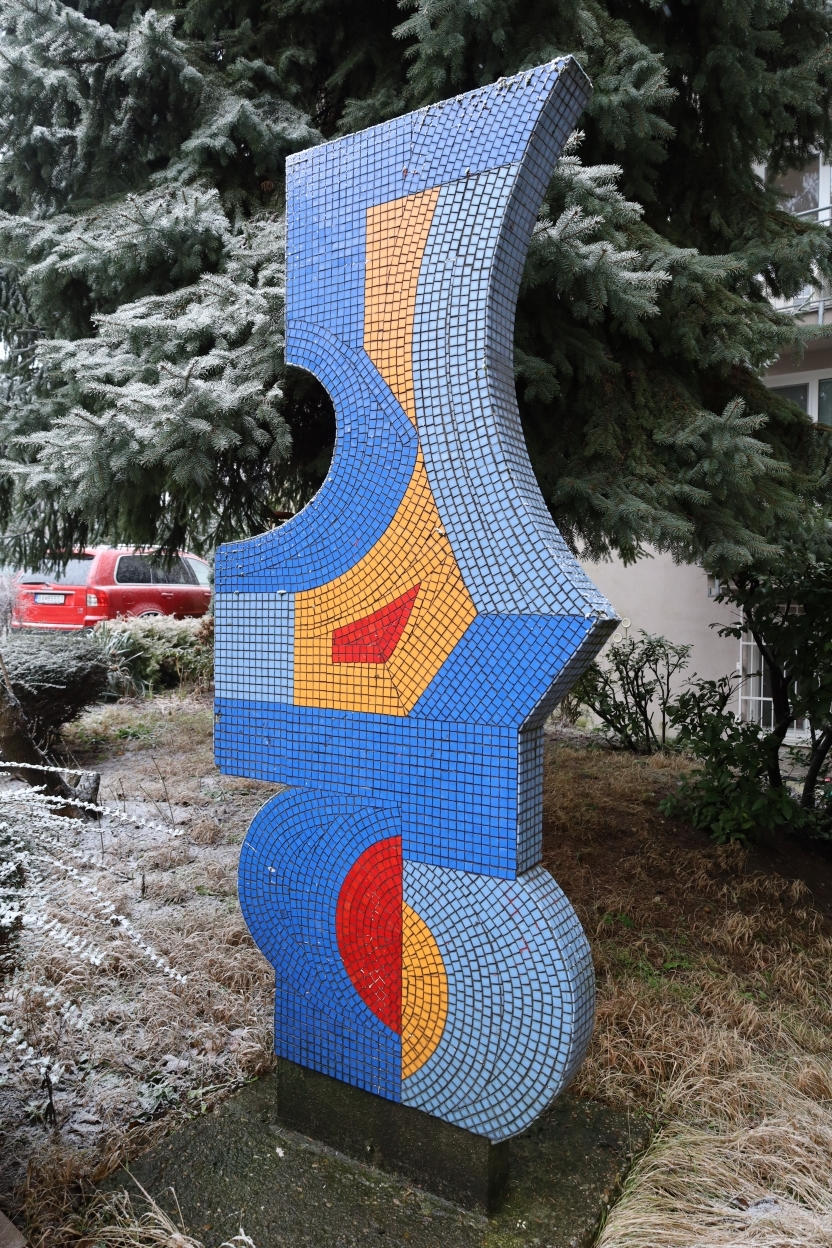
The horizontally designed object in front of entrance no. 41 is mounted on a concrete base to ensure its stability on the gently sloping terrain. The cut-out sections on its sides give it a distinctive look, while the work as a whole evokes a paper cutout transferred from the picture plane into three-dimensional space. The artist's sensibility as a painter is thereby reflected in his work in sculptural art.
The sculpture immediately captivates with its striking colours, created using glass mosaic. The surface is clad on each side with sintered architectural mosaic tiles measuring 20 × 20 mm in shades of red, white, green, and orange. It serves as a striking colour accent within the space, contrasting with the simple architecture of the residential building.
The irregular shape of the object influenced the manner in which the mosaic squares (tesserae) were laid out. In places where the shape folds sharply, individual tesserae are arranged in rectangular grids, which creates an impression of greater order. Conversely, in areas where the object curves, the mosaic lines undulate and intertwine, creating a more dynamic and expressive effect.
NB
Research status as of 10. 02. 2026.